Four areas families often hear mixed together
Speech is the motor and sound system used to produce spoken words. Language is the system for understanding and expressing meaning. Social communication concerns how communication works with other people and contexts. AAC includes tools and strategies—such as gesture, picture systems, signs, or speech-generating devices—that support expression or understanding. A child may need support in one area, several areas, or a different combination over time.
Why “say the word” is not always the goal
If a child cannot reliably request help, refuse, share an idea, or understand what is happening, perfect pronunciation of isolated words may not improve daily participation. A qualified speech-language professional selects goals from assessment and family priorities. Sometimes speech sounds are central; sometimes comprehension, vocabulary, sentence formulation, interaction, or access to AAC is more urgent.
The best communication target is not the one that looks most impressive in a session. It is the one that gives the child more reliable access to people, choices, and daily life.
AAC is communication—not a surrender on speech
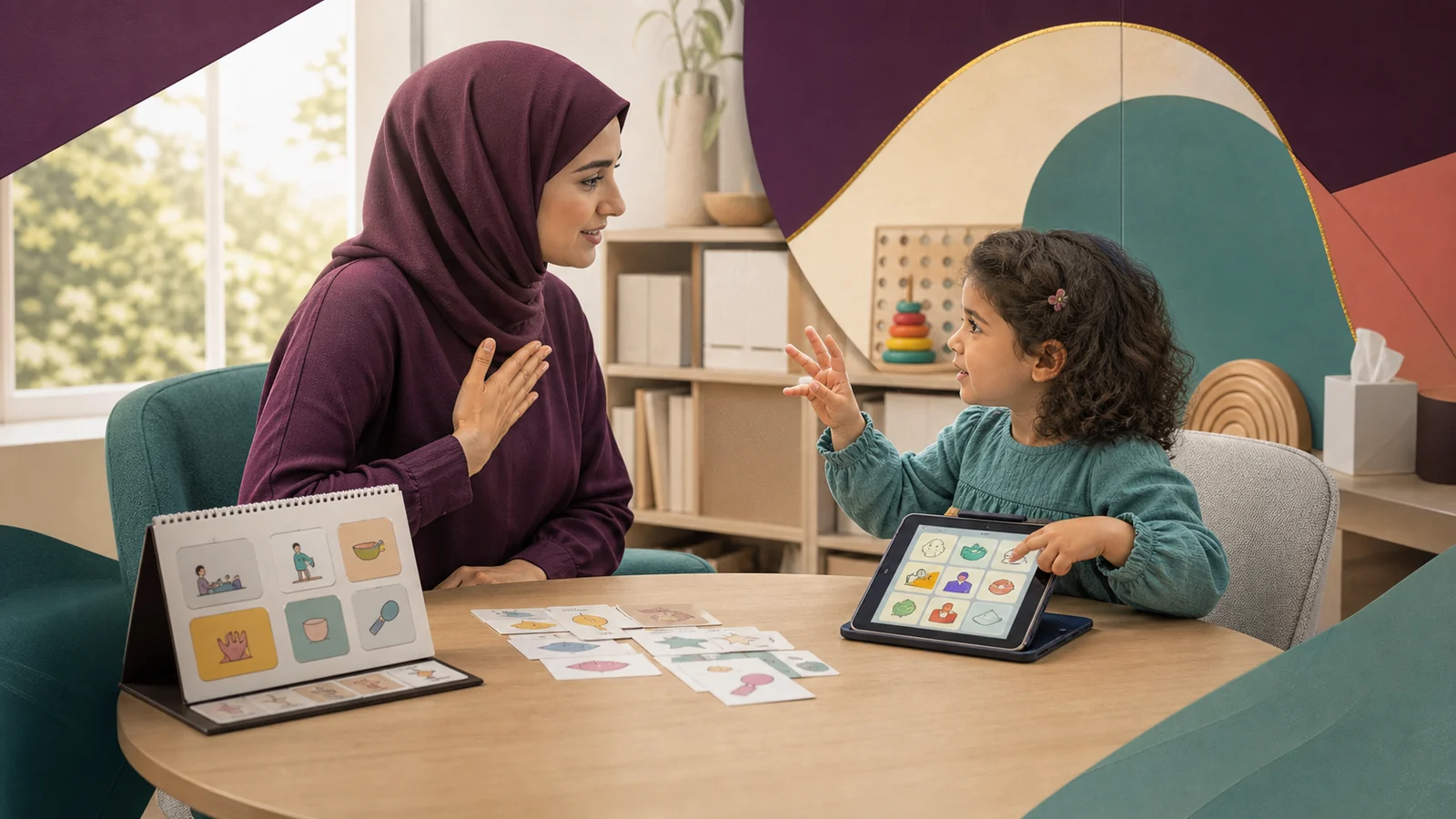
AAC can supplement existing speech or provide another route when speech is not reliable enough. It should not be withheld until a child proves readiness through arbitrary prerequisites. The system must fit motor, sensory, language, and access needs; adults also need training to model and respond to it. A tablet alone is not an intervention, and a few picture cards are not automatically a complete communication system.
What multilingual families should know
Using Arabic and English does not cause a language disorder. Assessment should gather history and samples across the languages the child uses and consider language exposure, proficiency, dialect, and opportunity. Weak performance in a less familiar language cannot by itself establish a disorder. Families should not abandon a home language that carries relationships, culture, and participation without a sound clinical reason.
Questions that improve a therapy plan
- Which communication domain is this goal addressing, and what evidence supports it?
- How will the child use the skill outside the therapy room?
- Are all of the child’s languages and communication modes being considered?
- What should family members model, wait for, or respond to during ordinary routines?
- How will we know the skill is becoming more independent and reliable?